
Middle East · Analysis · Series: Chokepoints, part 1
Level 4 · Do not travel
Strait of Hormuz: Who Is Allowed Where? (Oil Above $115)
Month nine of the Hormuz crisis: verified limpet-mine attacks, IRGC transit fees, UNCLOS transit passage disputes, bypass pipeline limits, and Brent pushing $117. An operational assessment of what is confirmed versus claimed.
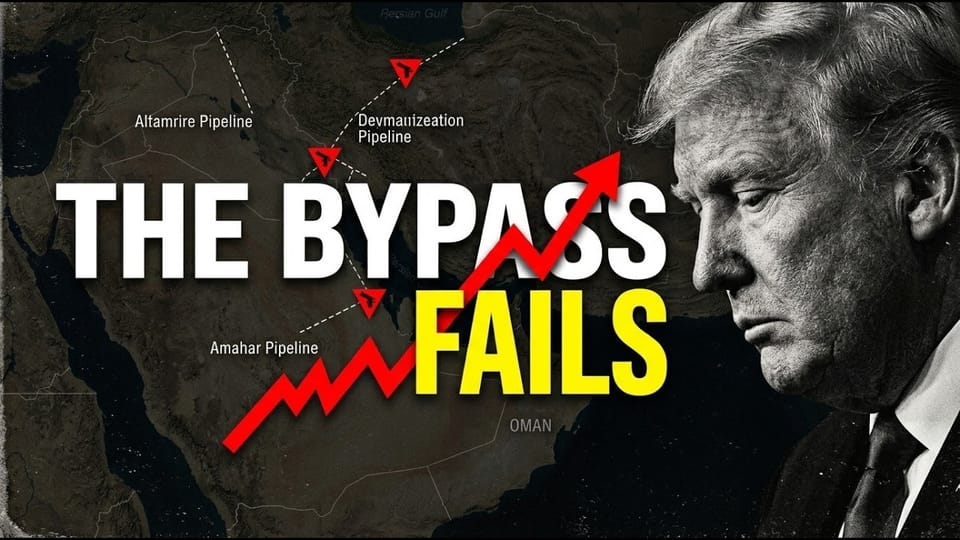
In the predawn hours approximately 25 nautical miles off the Musandam Peninsula of Oman, a fast-attack craft approached a loaded crude tanker under cover of darkness. Two magnetic limpet explosive devices were clamped to the ship's hull near the waterline before the craft retreated toward the northern coastline.
While shipboard fire-suppression teams successfully extinguished the resulting blaze without casualties, maritime security sources cited by Reuters confirmed the milestone: the first verified successful limpet-mine attack in the Strait of Hormuz since full-scale hostilities erupted on February 28, 2026. The vessel, identified by the Financial Times as the Louise 1, represents the latest flashpoint in an asymmetric maritime confrontation now entering its ninth month.
With global benchmark Brent crude closing October above $117 per barrel, the critical question facing commercial shipowners, naval task forces, and commodities desks is no longer theoretical: who is legally and militarily allowed where in the world's most critical maritime chokepoint?
1. The Strategic Baseline: Nine Months of Escalation
Prior to February 2026, the Strait of Hormuz functioned as the undisputed carotid artery of the international energy economy. Approximately 20 to 21 million barrels of crude oil and petroleum liquids transited the 21-mile-wide waterway daily—representing roughly 20% of global petroleum liquids consumption and more than a quarter of all seaborne-traded oil.
The nine-month escalation trajectory has fractured that baseline into distinct phases:
- March 4, 2026: Following initial military strikes, Tehran declared the Strait of Hormuz closed to vessels linked to hostile coalition states.
- April 8 – April 13: A short-lived humanitarian ceasefire collapsed, promptly answered by a formal U.S. naval blockade targeting Iranian commercial and energy export ports.
- June 17: Diplomatic negotiators agreed to a regional peace memorandum establishing preliminary safety corridors.
- July 8 – July 14: The maritime truce collapsed amid reciprocal accusations of covert mining; the naval interdiction regime was fully reinstated on July 14.
2. October Threat Telemetry: Verified Hits vs. IRGC Claims
The month of October witnessed an aggressive surge in gray-zone kinetic actions. Tactical reporting logs illustrate the compounding danger:
- October 5 Surge: The United Kingdom Maritime Trade Operations (UKMTO) documented five distinct maritime security incidents within a 24-hour cycle, ranging from aggressive armed boat approaches to electronic GPS spoofing across the Musandam traffic scheme.
- October 29–30 Claims: The Islamic Revolutionary Guard Corps (IRGC) Navy issued an official communique claiming three commercial tankers struck naval mines and two vessels were burning out of control. Crucially, the IRGC withheld ship names, IMO numbers, and flags of registry.
In open-source intelligence (OSINT) and naval risk analysis, distinguishing verified tactical events from psychological warfare is critical: while the limpet-mine attack on the Louise 1 was independently corroborated by UKMTO and Western intelligence monitors, the IRGC's sweeping claims of multiple burning tankers remain unverified propaganda designed to maximize insurance panic and commodity pricing.
3. Navigational Rights: The "Persian Gulf Strait Authority"
The central operational conflict in the strait is fundamentally jurisdictional. Iranian authorities argue that vessels navigating without their explicit consent are transiting "unauthorized zones."
On May 5, Tehran instituted the unilateral "Persian Gulf Strait Authority". The mechanism seeks to replace open international passage with a state-monopolized maritime regime:
- Northern Channel Routing: Tehran demands that all commercial traffic divert north into Iranian territorial waters, coordinating cargo manifests directly with the IRGC maritime operations center in Bandar Abbas.
- Extortionate Transit Fees: Shipping intelligence reports indicate at least one foreign-flagged VLCC paid upwards of $2 million to secure safe escort and transit clearance through the northern channel.
- The Coalition Counter-Position: The Commander of U.S. Central Command (CENTCOM) reiterated this week that the international Traffic Separation Scheme (TSS) corridors running through Omani territorial waters remain physically sweep-cleared of moored mines, warning commercial operators that complying with Iranian demands legitimizes illegal maritime extortion.
The International Law Deadlock
Under Part III of the United Nations Convention on the Law of the Sea (UNCLOS), the Strait of Hormuz connects an area of the high seas or exclusive economic zone to another area of high seas/EEZ, granting all ships the non-suspendable right of transit passage (Article 44). Coastal states may not hamper or suspend transit passage.
However, the legal reality on the water is paralyzed: Iran signed UNCLOS in 1982 but never ratified it, asserting customary rights to regulate transit through its territorial seas. The United States has never ratified UNCLOS. With international treaty mechanisms rendered toothless, navigational access is dictated strictly by naval deterrence and the balance of risk.
4. The Macroeconomic Equation: Oil Above $115
The financial markets have priced in this persistent maritime friction. Physical commodity traders are no longer pricing temporary disruption; they are pricing sustained chokepoint taxation:
| Benchmark Contract | October 30 Settlement | Monthly Delta | Key Structural Drivers |
|---|---|---|---|
| Brent Crude (Dec 2026) | $117.64 / bbl | +13.6% (Oct gain) | Immediate prompt delivery tightness; tanker rerouting premiums. |
| Brent Crude (Jan 2027) | $113.43 / bbl | Steep Backwardation | Market pricing long-term physical supply impairment. |
| WTI Crude (Dec 2026) | $104.12 / bbl | +11.2% (Oct gain) | Expanding Brent-WTI spread due to U.S. export arbitrage pull. |
While oil prices spiked near $126 during the initial outbreak in March before retreating to $71.57 during the brief July truce, the October surge reflects a structural realization: commercial underwriters are hesitant to quote standard war-risk binders. In the absence of published, verified actuarial rates, underwriters are issuing emergency ad-hoc voyage policies or declining cover altogether for non-escorted tonnage.
5. Can the World Bypass Hormuz? The 9-Million-Barrel Ceiling
A frequent talking point among energy policymakers is the capacity of regional overland pipeline infrastructure to circumvent a blocked Strait of Hormuz. A realistic infrastructure audit demonstrates why this fallback is insufficient:
- Saudi Petroline (East-West Pipeline): Runs ~746 miles from Abqaiq to the Red Sea port of Yanbu. Expanded capacity peaks at roughly 5.0 to 7.0 million bpd, though operational pumping limits frequently constrain throughput below nameplate.
- Abu Dhabi Crude Oil Pipeline (ADCOP): Transits crude from Habshan directly to the port of Fujairah on the Gulf of Oman, bypassing the strait entirely. Maximum sustained throughput is capped at 1.5 to 1.8 million bpd.
- Iraq-Turkey Pipeline (Kirkuk-Ceyhan): Geopolitically volatile and historically plagued by infrastructure sabotage and transit fee disputes, currently handling less than 0.5 million bpd in sustained flows.
Combined, regional bypass pipelines can divert no more than 8 to 9 million barrels per day under emergency surge conditions. Against a baseline deficit of 20 million bpd, a full or protracted closure of the strait leaves an irreducible global shortfall of 11 to 12 million barrels daily—an arithmetic reality that guarantees oil prices remain pinned above triple digits.
6. Strategic Scenarios: What Security Planners Must Monitor
Moving into late 2026, Global Checkmate outlines three operational scenarios for the Strait of Hormuz:
- Protracted Gray-Zone Attrition (Most Likely): Continued sporadic use of uncrewed surface vessels (USVs), magnetic limpet mines, and electronic warfare calibrated to inflict economic pain without crossing the threshold that triggers massive inland retaliatory strikes. Tanker traffic slows by 40%, relying on ad-hoc shadow arrangements.
- Formal Escorted Convoys (Operation Earnest Will 2.0): The U.S. Navy and regional allies deploy structured destroyer escorts through the southern TSS corridors. While stabilizing transit confidence, this ties down significant naval assets and concentrates high-value targets for saturation drone salvos.
- Kinetic Spillover to Coastal Terminals (High Impact / Low Probability): In the event of a direct naval clash, strikes expand beyond commercial tankers to coastal loading terminals (Ras Tanura, Kharg Island, Fujairah). Under this scenario, energy analysts project crude surpassing $150/bbl, precipitating acute global stagflation.
Sources & Maritime Intelligence
Factual claims in this dossier have been verified against maritime reporting authorities and market data:
- gCaptain: Five Hormuz Incidents Reported as Tanker Attacks Mount [Confirmed]
- USNI News: October Sees Near-Daily Strikes on Ships in Hormuz [Reported]
- Euronews: IRGC Claims Tankers on Fire in Strait of Hormuz Amid Stalled Talks [Reported]
- Nation Thailand: Brent Ends October Up 13.6% on Escalating Hormuz Clashes [Confirmed]
- The National: Oil Prices Settle Sharp Monthly Gain on Hormuz Transit Risk [Confirmed]
- Wikipedia: Chronological Documentation of the 2026 Strait of Hormuz Crisis [Reported]
Researched and drafted with AI assistance; edited and verified by Davi Martins.